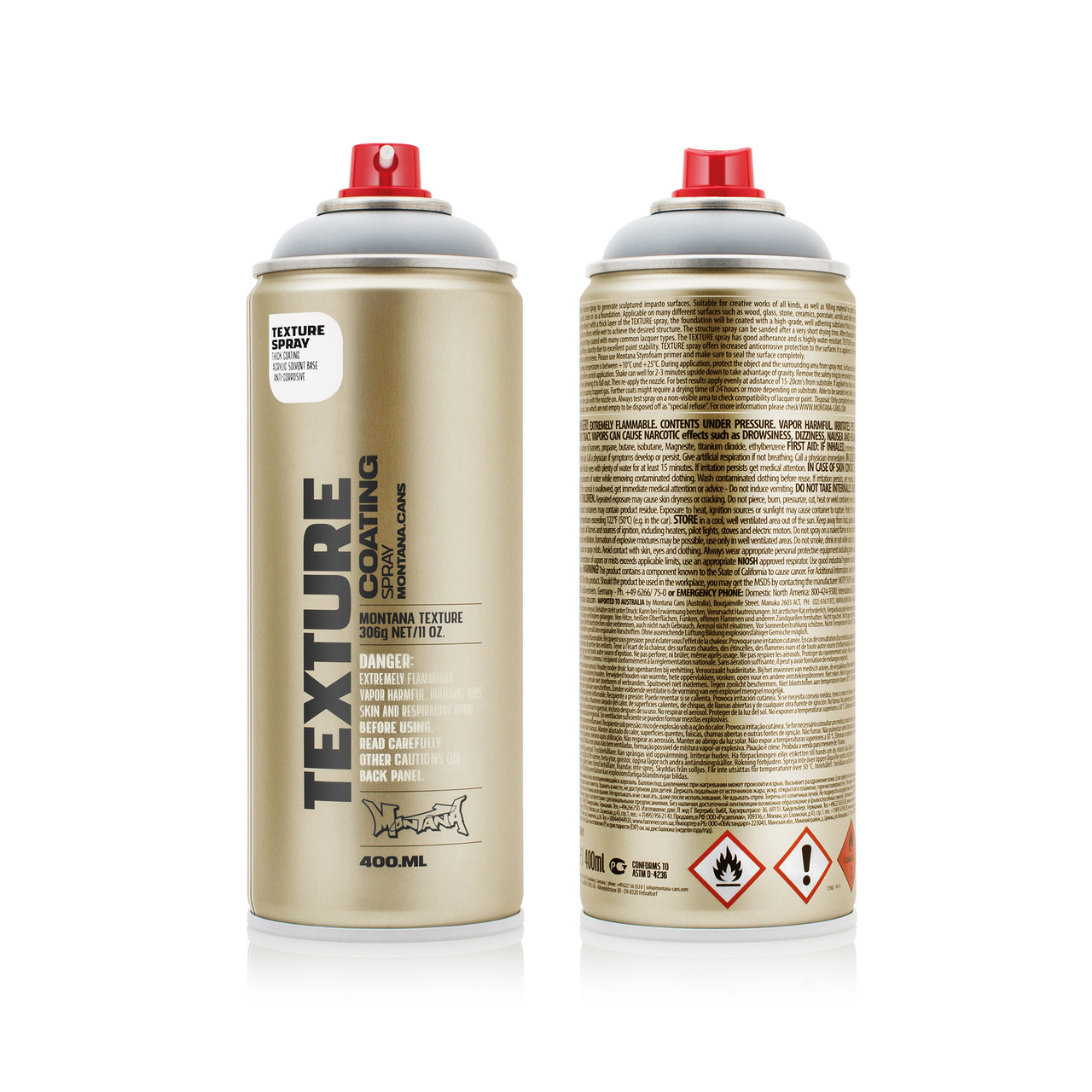
A grey texture spray that builds up thick, sculpted impasto surfaces. Spray on a heavy coat, shape it while it’s wet, then sand and paint over it once dry. Also useful for filling small cracks and holes. Water-resistant, well-adhering, and suitable for many surfaces. A 400ml can.
Most spray paint is meant to lie flat. Montana Texture Spray does the opposite. It builds up in a thick layer, and while it’s still wet, you can mould it into the structure you want: ridges, peaks, swirls, rough stone, or rugged relief. Once it has dried, it becomes a solid, textured base that you can sand, paint, and varnish.
It’s popular with artists and designers who want an impasto effect without the cost and weight of heavy paint, and with decorators who need to fill small cracks and holes or create a textured foundation. The paint is stable and sticks well, so it holds thick layers without sagging, and it’s highly water-resistant once cured.
Why you’ll like it
Builds up thick, sculptural layers that can be moulded while wet
Creates impasto and relief effects without heavy paint
Fills small cracks, holes, and irregularities
Can be wet sanded after a very short drying time
Good adhesion and strong water resistance
Helps protect surfaces from corrosion
Can be painted over with many common paints and varnishes once cured
A 400ml can that covers about 1.5 square metres at minimum, depending on how thickly you apply it
Works as a textured base for murals and street art
Great for
Textured murals and street art
Relief effects on canvas and panels
Stone, rock, and rugged-surface effects
Props, models, and set design
Filling small cracks and holes before painting
Adding texture to frames, boards, and decorative pieces
Creating a textured foundation before spraying colour
Surfaces it works on
Wood, glass, stone, ceramics, porcelain, acrylic, and other non-elastic surfaces. It isn’t suited to flexible materials, since the thick layer can crack as the surface bends.
How to use
Prepare the surface so it’s clean, dry, and free of dust and grease.
Shake the can well, and test on a spare surface first.
Spray a thick layer onto the surface. Build up the layers where you want a heavier texture.
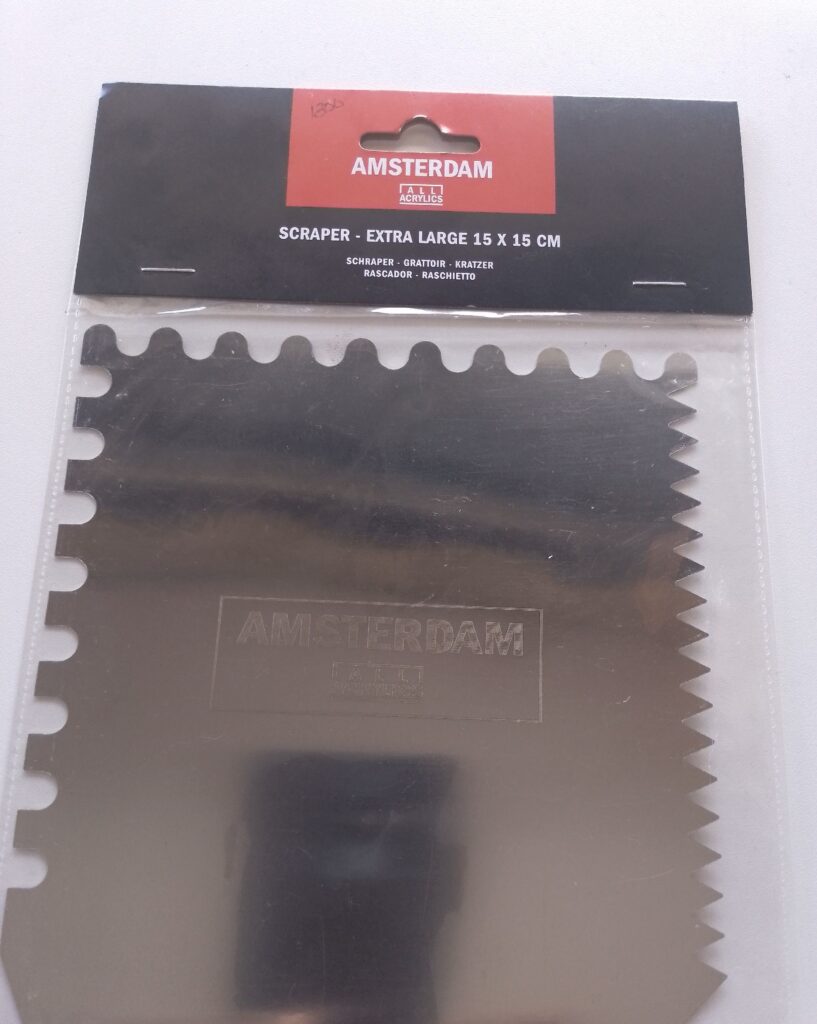
While the paint is still wet, shape it with a brush, a palette knife, a sponge, or even your gloved hands to get the structure you want.
Leave to dry. The surface can be wet sanded after a very short drying time if you want to smooth parts of it.
Once it’s thoroughly dry and cured, top-coat it with spray paint, acrylic paint, or a varnish.
Tips for better results
Practise on a spare board first. The texture changes with spray distance, thickness, and how long you wait before shaping.
Spray closer and thicker for heavy, rough relief. Spray further away and thinner for a finer texture.
Work quickly. The paint is easiest to shape while it’s wet, and it starts to set.
Use a wet sandpaper pass to soften peaks or smooth out edges.
For a stone or rock look, paint over the dry texture with a dark base, then dry brush lighter colours over the raised areas.
Work in a well-ventilated space, wear a mask, and protect the surrounding area from overspray.
After use, turn the can upside down and spray briefly until it runs clear, to keep the nozzle from clogging.
Store the can upright in a cool place, away from heat.
The texture is built up in thick layers, so it takes longer to dry than a normal spray coat. Allow extra time before handling and painting.
It isn’t suitable for flexible surfaces, since thick layers can crack when they bend.
Always test the spray on a hidden area first to check it’s compatible with the surface.
Spray paint is a hazardous item. Follow the safety instructions on the can, and wear protective clothing, a mask, and gloves.


































Reviews
Clear filtersThere are no reviews yet.